
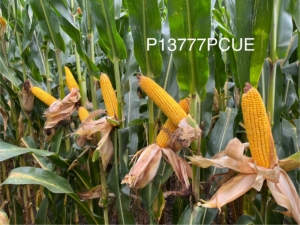
An intriguing research summary from Field Crops Research emphasizes how crop management practices influence both yield and carbon footprint in modern corn hybrids compared with older genetic lines. The study evaluated widely grown Pioneer hybrids spanning the early 1960s through the 2020s, including P1197 and P1185. Key takeaways from the research below:
Summary – Key Results
Yield and Genetics × Management Interactions
- Modern hybrids outperformed older hybrids under all management systems.
- Modern hybrids showed strong, positive yield responses to intensive, modern management.
- Oldest hybrids produced similar yields regardless of whether they were grown under historic or modern management.
- This demonstrates that management is essential for realizing the higher yield potential of modern hybrids, while older hybrids show limited responsiveness to management changes.
- Consequently, estimates of genetic gain differ depending on the historical management conditions used for comparison.
- When grown under the oldest vs. most modern management, the most modern hybrids showed a 16% yield difference.
- Results were consistent across locations.
- Farmers continuously adopt the latest hybrids and adjust management practices, and modern maize hybrids have been bred specifically to thrive under high-input systems.
- Older, historic hybrids show little improvement under higher input levels, highlighting the evolving genotype-by-management relationship.
Carbon Intensity and Emissions
- Modern management practices had higher total greenhouse gas emissions than historic ones, primarily due to higher nitrogen fertilizer rates.
- Modern hybrids had slightly higher emissions than older hybrids (due to grain drying, transport, and residue), but were more efficient per ton of grain produced (lower carbon intensity).
- Modern hybrids maintained their efficiency even as yields increased under intensive management.
- Older, historic hybrids became less efficient (higher carbon intensity) when grown under modern management.
- Regardless of management system or modeling approach, modern hybrids consistently showed lower carbon intensity than older ones.
- When each hybrid is assessed under its corresponding historical management (e.g., 1960s hybrids with 1960s management), there was a 19% reduction in carbon intensity from 1960 to today.
- Findings were consistent across environments and carbon-intensity models.
Implications for Breeding and Management
- Modern hybrids possess higher yield potential that is only fully realized under modern, high-input management.
- Older, historic hybrids would not show the same yield response to increased inputs, reinforcing that modern breeding has selected for genotypes adapted to current management systems.
- Thus, management plays a greater role than often assumed in achieving high yields—but high-input management does not necessarily increase carbon intensity, because modern hybrids convert resources more efficiently.
- The results challenge the assumption that high-input agriculture inherently leads to higher environmental impact.
See this link for the complete research paper:
Crop Management Practices More Important for Modern Corn Hybrids than Past Corn Hybrids